
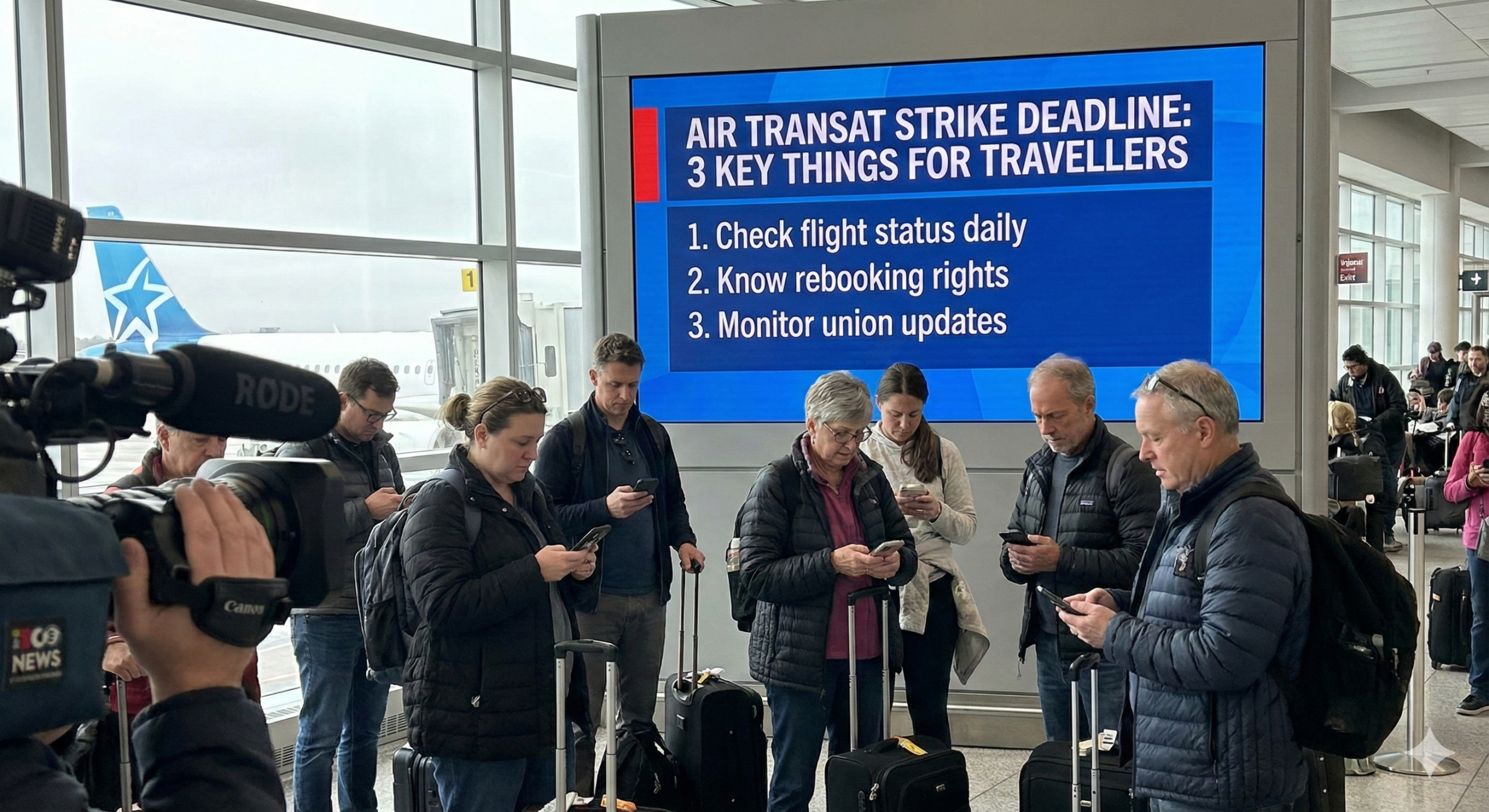
As Air Transat passengers gear up for the busy holiday travel season, the airline is warning of potential flight suspensions as it prepares for a possible nationwide pilots’ strike. The looming job action, driven by stalled contract negotiations, could disrupt travel for thousands of customers in the coming days.
The Air Line Pilots Association (ALPA), which represents roughly 750 Air Transat pilots, issued a formal 72-hour strike notice over the weekend. That notice clears the way for a potential work stoppage starting as early as 3 a.m. ET on Wednesday, raising concerns among travellers about cancellations, delays, and last-minute changes to their itineraries.
Below is an in-depth look at what passengers need to know as the strike deadline approaches—and how planning ahead can help minimize travel headaches.
1. When Could the Strike Begin?
Wind-Down Strategy Already Underway
Transat A.T. Inc., the parent company of Air Transat, confirmed that it has already begun scaling down operations to prepare for the possibility of labour disruption. The company says this gradual wind-down is intended to reduce the chances of passengers being stranded abroad should a strike suddenly halt flight activity.
Air Transat currently operates nearly 40 active aircraft, flying more than 500 routes weekly and transporting tens of thousands of passengers across domestic, transborder, and international destinations.
With this volume of operations, even a brief strike—or one that is ultimately avoided—can have significant ripple effects.
Potential for Multi-Day Disruptions
Even if contract talks result in a last-minute agreement, the airline warns that widespread cancellations triggered by the strike notice will not simply reset overnight. Once a large number of flights are cancelled or rescheduled, it can take several days, or longer, to restore the network to normal conditions.
That means passengers with travel scheduled later in the week may feel the impact, even if labour disruptions last only hours or are called off entirely.
Why Airlines Do This Before a Strike
A controlled reduction in departures is standard industry practice. Airlines often wind down flights ahead of a potential strike so they can:
-
Avoid having aircraft stuck at international airports
-
Reduce airport crowding and customer service bottlenecks
-
Maintain more control over aircraft positioning
-
Ensure stranded passengers are not left without options
Air Transat says it is committed to minimizing the number of travellers caught mid-trip with no available return flight.
2. What Happens if My Flight Gets Cancelled?
Passengers Travelling Before December 12
Travellers scheduled to depart before Dec. 12 are urged to check their flight status frequently—especially before heading to the airport. The airline says any cancelled flights will be communicated directly to passengers by email.
If a flight is cancelled as part of the pre-strike wind-down, customers with departures before Dec. 12 will automatically receive a refund.
Passengers Travelling on or After December 13
For travellers with later departures—December 13 and onward—Air Transat says regular fare rules and terms will apply. This means rebooking, refunds, or travel credits may vary depending on the type of ticket purchased.
If a Return Flight Is Cancelled During Travel
Air Transat has outlined the following passenger rights when it comes to return trips:
-
The airline says it will issue a replacement ticket within 48 hours of the original travel time, provided an alternative flight exists.
-
If the passenger declines the replacement itinerary, they are entitled to a refund for the unused portion of their ticket.
Compensation Rules Under Canadian Law
Labour disruptions fall under exceptions within the Air Passenger Protection Regulations (APPR). According to SkyRefund CEO Ivalyo Danailov, cancellations caused by strikes are typically classified as events outside the airline’s control.
This means:
-
Passengers are not usually eligible for compensation for inconvenience
-
Refunds and rebooking options must still be provided
-
Additional expenses (hotels, meals, etc.) are rarely reimbursed
Travellers should keep this distinction in mind when evaluating their options, especially those facing long delays or multi-day rebooking windows.
Travel Insurance May Help
Passengers with comprehensive travel insurance may have more flexibility. Some policies cover:
-
Trip disruptions due to labour disputes
-
Additional meal and accommodation costs
-
Refunds for prepaid travel expenses
Travellers are encouraged to review their policies before departure.
3. What Are the Key Issues in the Contract Talks?
Pilots Seeking Wage Increases and Stronger Job Protections
The core dispute between Air Transat and its pilots centres on compensation and working conditions. The union argues that its current 10-year-old collective agreement no longer reflects today’s aviation labor market—especially amid a North American pilot shortage.
Pilots are seeking improvements in:
-
Wages
-
Job security protections
-
Quality-of-life considerations, including scheduling and rest periods
Intensified Negotiations in Montreal
Representatives for ALPA and Transat A.T. have been meeting intensively in Montreal, conducting round-the-clock bargaining sessions in an effort to avoid a shutdown, particularly as demand surges during the holiday season.
Despite this, both sides have accused each other of failing to compromise sufficiently:
-
The union claims the company has not adequately addressed key wage and quality-of-life concerns.
-
The company argues it has made reasonable proposals and accuses the union of overreaching during a time when the airline industry is still recovering from financial pressures.
Industry-Wide Pressure
Air Transat’s most recent annual report noted that airlines continue to face significant pressure from pilot unions, especially as carriers compete for limited qualified personnel.
This competitive environment has strengthened the bargaining power of pilots across North America, with several carriers recently securing substantial pay increases for flight crews.
Union Unanimity Adds Pressure
In a strong show of unity, Air Transat pilots voted 99% in favour of strike action if necessary, with 98% voter participation among eligible members.
This overwhelming mandate gives the union considerable leverage, and industry observers note that such decisive support often signals prolonged negotiations.
Leave a Reply