
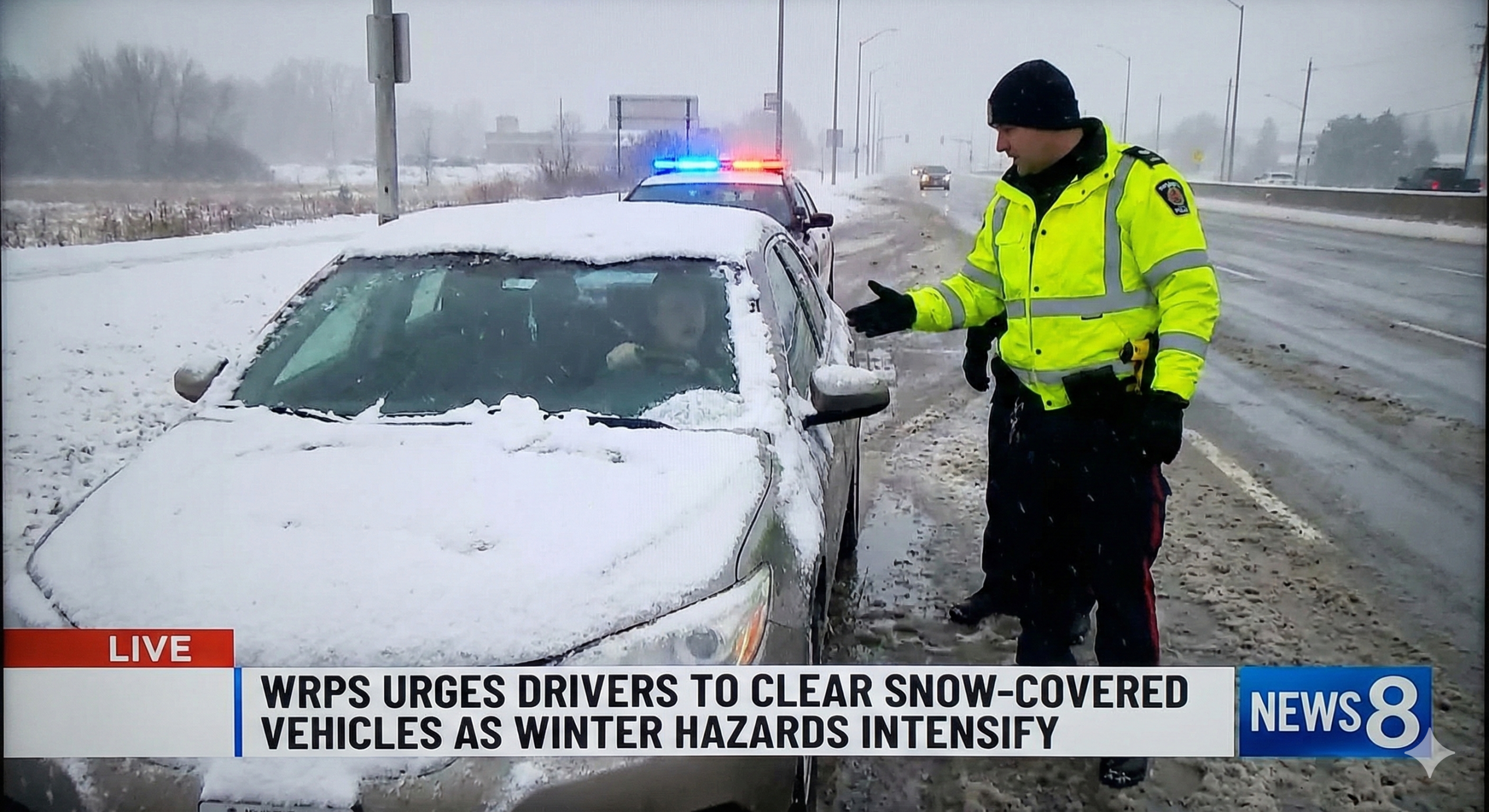
As Southwestern Ontario enters the heart of the winter season, the Waterloo Regional Police Service (WRPS) is renewing its urgent warning to motorists: clear all snow and ice from your vehicle before hitting the road. Following the region’s first significant snowfall of the holiday season, police say they want to prevent avoidable winter collisions and promote safer road conditions for everyone.
The reminder—an annual appeal from WRPS—comes as residents brace for several more months of harsh, unpredictable weather. The early December snowstorm brought heavy accumulation, difficult visibility, and a surge in roadway challenges, prompting officers to emphasize the life-or-death importance of properly clearing vehicles.
A Dangerous Start to the Winter Driving Season
First Major Snowfall Creates Widespread Problems
The season’s first major snowfall arrived abruptly, transforming neighbourhoods into winter landscapes but also triggering dangerous driving conditions across Waterloo Region. Roads became slick, visibility was impaired, and multiple vehicles struggled on inclines, intersections, and unplowed routes.
WRPS reported numerous calls about traffic delays, minor collisions, and vehicles sliding off the road—problems that often accompany early winter storms when drivers are still adjusting to seasonal conditions.
Police Aim to Prevent Common Winter Hazards
According to WRPS Staff Sergeant Scott Griffiths, snow-covered vehicles remain one of the most persistent and preventable hazards officers see every winter.
“What we try to impress upon people is that we’re not doing this for enforcement purposes,” Griffiths explained. “We’re not out there looking just to write you a ticket. What we’re looking to do is take the blindfold off your vehicle, so that you can have the best vision you can.”
Griffiths noted that many drivers underestimate the danger of limited visibility caused by snow and ice. Even a thin layer of frost or snow can significantly reduce a driver’s reaction time and depth perception—risk factors that increase dramatically during slippery conditions.
Why Clearing Snow Is a Community Safety Issue
Visibility: The First Line of Defense
WRPS stresses that snow removal is not just about a driver protecting their own vehicle. It is a matter of community-wide safety.
“It’s to make sure that when you’re going down the street in this terrible weather, when you’re trying to concentrate on the car in front of you or the intersection approaching, you have the best possible advantage you can to traverse your trip safely,” Griffiths emphasized.
A fully cleared windshield is only part of the equation. Drivers are legally responsible for ensuring they have an unobstructed 360-degree view. This means:
-
Windshield and front windows must be fully scraped and cleared
-
Rear and side windows must be transparent
-
Headlights and taillights must be visible and functional
-
Vehicle roofs must be completely free of snow and ice
Even a small amount of snow left on the roof can blow onto the windshield during braking, disabling visibility at critical moments. In other cases, chunks of ice can dislodge and strike vehicles behind, creating extremely dangerous conditions.
A Responsibility Shared by All Drivers, Including Truck Operators
While the public conversation often focuses on personal vehicles, WRPS is reminding residents that commercial trucks and transport vehicles must also follow the same rules. Large accumulations of snow atop transport trailers have been known to break free, striking vehicles with significant force.
“It can be considered an insecure load,” Griffiths said. “If it were to fly off or cause an obstruction, it can be an enforceable charge. It would be part of our enforcement and education for those drivers because typically if they’re not clearing off that part, they’re not clearing off other parts.”
Transport trucks pose heightened risks because the amount of snow they carry is often greater, heavier, and more difficult to remove—making compliance even more critical.
Legal Consequences and Fines for Non-Compliance
Ontario’s Winter Driving Regulations
Ontario law requires drivers to maintain an unobstructed view of the road at all times. Failure to comply results in fines that can quickly escalate.
-
Driving with an obstructed view (such as snow-covered windows) carries a fine of up to $110
-
Driving with dangerous amounts of snow or ice on a vehicle may lead to fines of up to $500
Commercial drivers face even steeper penalties, with fines reaching as high as $1,000 for failing to clear snow from transport trucks or larger commercial vehicles.
These fines are not simply punitive; they aim to reinforce safe behaviour and prevent severe accidents caused by avoidable negligence.
WRPS Encourages Drivers to Plan Ahead
Leaving Early to Avoid Unsafe Shortcuts
Every winter, WRPS sees drivers rushing through their morning routines and scraping only small “portholes” of visibility through frost and snow. Griffiths calls this habit extremely hazardous.
He recommends that motorists build extra time into their routine, especially after overnight snowfalls.
“Overall safety is more important than getting to where you need to go on time,” Griffiths said. Clearing a vehicle thoroughly—especially after heavy snowfall—can take several minutes, but those minutes can mean the difference between a safe commute and a preventable collision.
A Culture of Winter Preparedness
WRPS encourages all residents to adopt proactive winter habits:
-
Check weather forecasts each evening
-
Allow vehicles to warm up before clearing
-
Store snow brushes, scrapers, and winter emergency kits inside vehicles
-
Avoid driving with partially cleared windows
-
Ensure wiper fluid is topped up and winter-grade
These simple steps, officers say, help create a safer winter environment for everyone on the road.
Community Impact: A Shared Responsibility for Winter Safety
Protecting Pedestrians, Cyclists, and Other Drivers
Snow-covered vehicles endanger far more than just their drivers. Pedestrians crossing intersections, cyclists navigating snowbanks, and other motorists all depend on drivers’ ability to see clearly and react responsibly.
WRPS has seen several winter incidents where poor visibility played a significant role—from vehicles sliding through crosswalks to rear-end collisions caused by obstructed rear windows.
Preventing Emergency Services Overload
Each winter, emergency responders see a spike in calls related to weather conditions. Ensuring vehicles are properly cleared helps reduce avoidable accidents, allowing police, paramedics, and firefighters to focus resources on truly urgent emergencies.
Conclusion: Safety First as Winter Deepens
The WRPS reminder comes at a crucial moment, with long months of winter weather still ahead. As snowfall intensifies and road conditions fluctuate, the simplest habits—clearing snow, improving visibility, and driving cautiously—can have the greatest impact on keeping roads safe.
Police emphasize that their message is grounded not in enforcement, but in a commitment to community well-being. By taking a few extra minutes each day to properly clear snow and ice, drivers play an essential role in preventing collisions, protecting their own safety, and contributing to a safer winter for everyone in Waterloo Region.
Leave a Reply