
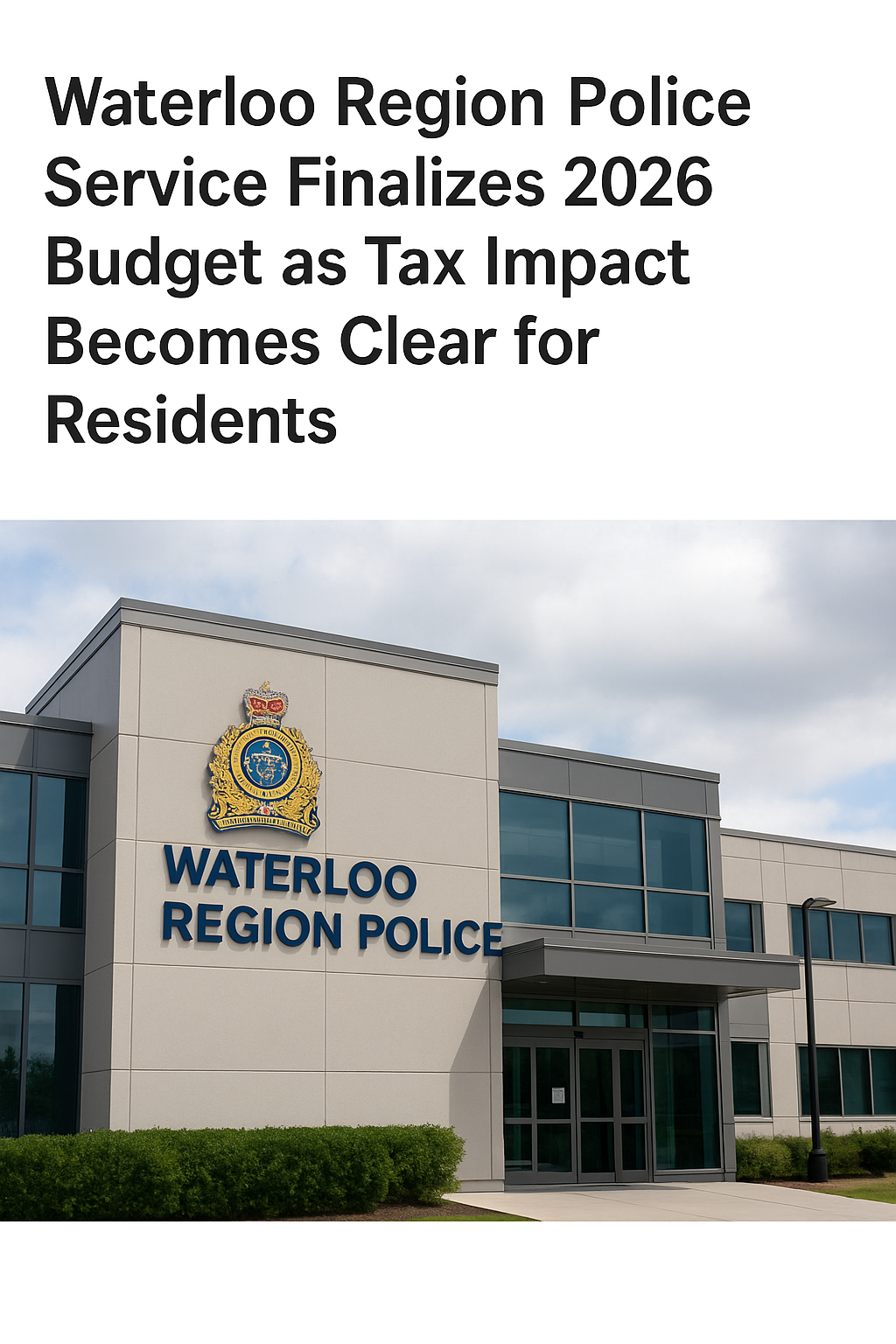
As Waterloo Region moves closer to confirming its 2026 financial blueprint, the Waterloo Region Police Service (WRPS) has finalized its spending plan, offering residents a clearer picture of what their property tax contributions toward policing will look like in the year ahead. The proposed budget reflects the evolving demands placed on local law enforcement, the pressures of community growth, and ongoing efforts to strengthen public safety across the region.
A Comprehensive Financial Plan Ahead of the Regional Vote
The WRPS board has officially submitted a budget request of $272.6 million for 2026. This figure represents a 7.98 percent increase over the previous year—an expansion of roughly $20 million in police spending compared to 2025. The proposal arrives as the regional council prepares for the final vote on its broader budget package, which includes major portfolios such as transportation, housing, and social services.
Understanding the Tax Impact for Local Ratepayers
When the budget was first introduced to the region’s Budget Committee on November 26, the financial increase was already substantial. At that time, the estimated impact on property owners equated to a 6.75 percent tax increase attributed to policing costs—equivalent to about $57 more annually for the typical household in 2026.
However, a recent update to the municipality’s assessment growth figures slightly shifted the financial landscape. The revised property valuation outlook now places the policing-related increase at a 6.38 percent rise, meaning the average homeowner would pay about $54 more per year instead of the earlier projection.
This recalibration offers modest relief to ratepayers, though the overarching financial pressure remains significant. The region continues to see rapid population growth and rising service demands, placing public safety at the center of fiscal debates.
Why WRPS Says the Increase Is Necessary
The police service’s budget is grounded in a detailed operational and staffing plan designed to expand capacity, enhance investigative capabilities, and address emerging safety challenges. The WRPS leadership has repeatedly emphasized that the region’s steady growth—as well as the complexity of modern policing—requires sustained investments in both personnel and specialized services.
A Multi-Year Hiring Strategy
A major component of the 2026 budget is WRPS’ long-term staffing strategy. The service plans to hire 73 additional officers by 2030, a multi-year initiative aimed at strengthening front-line response and reducing workload pressures on existing personnel.
For the upcoming year, the service expects a net gain of 28 officers, marking one of the most significant single-year increases in recent memory. WRPS officials argue that boosting staffing levels is essential not only for routine patrol and emergency response but also for addressing specialized crime trends that require highly trained investigative teams.
Where the New Positions Will Be Allocated
The 2026 hiring plan breaks down into several key areas:
-
13 new sworn front-line officers
These positions will support patrol operations, community policing, and rapid incident response. As calls for service increase across Kitchener, Waterloo, Cambridge, and surrounding townships, these officers will help manage growing demand. -
6 officers added to investigative services
This expansion aims to help WRPS handle complex cases such as cybercrime, fraud, major assaults, and emerging criminal networks. Investigators have reported heavier caseloads and greater resource needs over the past several years. -
6 new positions within the road safety division
With road safety remaining a top public concern—particularly around impaired driving, speeding, and collision-related fatalities—the division will see strengthened enforcement capacity. -
2 additional court security officers
As regional court activity grows, WRPS must continue fulfilling legislatively mandated security responsibilities. These officers will help ensure safer courthouse operations and more efficient movement of individuals in custody.
Balancing Public Expectations and Financial Responsibility
Budget discussions this year have placed police spending under heightened public scrutiny. Residents, advocacy groups, and some local councillors have questioned whether annual increases of this scale align with taxpayer expectations and broader regional priorities.
Community Needs vs. Cost Pressures
Supporters of the proposed budget argue that adequate policing resources are crucial for maintaining safe communities and supporting population growth. They point to rising demands in mental health-related calls, domestic incidents, cybercrime, and road safety enforcement—all of which require specialized training and personnel.
On the other hand, critics contend that consistent budget increases place an unsustainable strain on homeowners already coping with inflation, housing costs, and rising utility bills. Some have called for reallocating funds toward social programs that address root causes of crime, such as housing instability and mental health services.
WRPS leadership maintains that the proposed budget strikes a necessary balance. The service argues that without strategic investment today, the region may face greater long-term costs—both financially and in terms of community well-being.
Regional Council Prepares for Final Budget Decision
The finalized WRPS budget now moves to the regional council, where elected officials will weigh the proposal against departmental requests across the entire municipal spectrum. The decision is expected to be part of the broader 2026 budget vote, which typically takes place in mid-December.
What Happens Next
Once approved, WRPS will begin implementing its staffing plan, procurement schedule, and operational priorities at the start of the new fiscal year. Recruitment for the new officers is already underway, as the onboarding and training process can take several months.
The police service will also continue working with community partners, neighborhood groups, and municipal agencies to ensure that its expanded resources align with local needs and strategic safety goals.
Conclusion: A Pivotal Year for Policing in Waterloo Region
With its most significant year-over-year spending increase in recent years, the Waterloo Region Police Service is positioning itself to adapt to a rapidly evolving landscape. The finalized budget underscores growing demands for responsive, well-resourced policing while also highlighting the fiscal challenges facing municipalities and taxpayers alike.
As regional councillors prepare to cast their votes, the debate around policing costs, community safety, and long-term planning is likely to persist. But for now, ratepayers have a clearer sense of what to expect—and WRPS has outlined an ambitious path forward aimed at strengthening public safety across the region.
Leave a Reply