
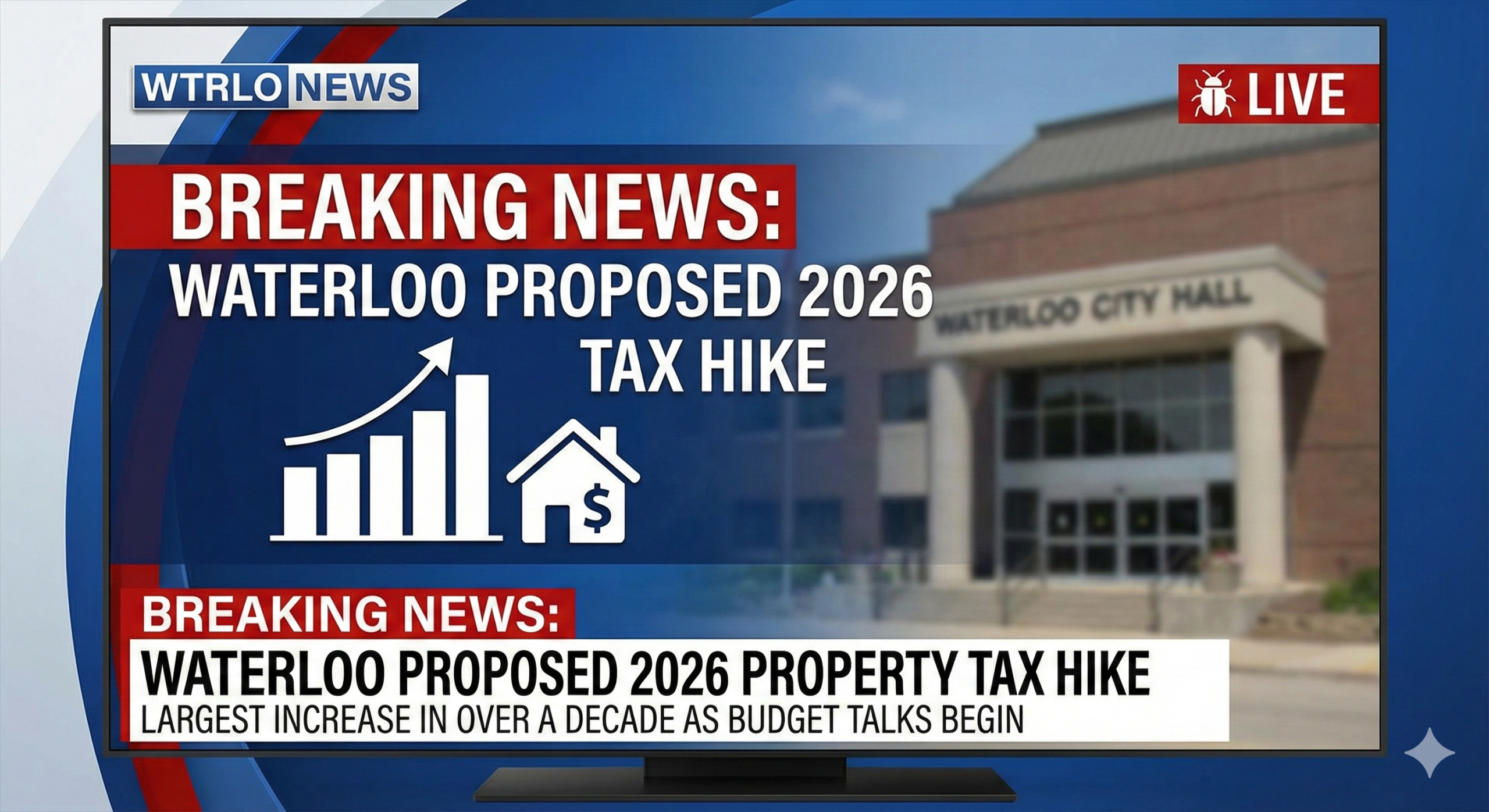
Residents of the City of Waterloo are preparing for what could be the most significant property tax increase the municipality has seen in over ten years. City council is set to begin formal discussions on the proposed 2026 budget, and early figures suggest a notable jump in the city’s portion of property taxes — a move that may further strain household finances already impacted by rising living and utility costs.
On Monday, councillors will review a budget proposal that currently includes a 6.41 per cent increase on the municipal portion of property taxes. If adopted, this increase alone would add approximately $107 per year for the average Waterloo homeowner. When combined with forecasted increases in utility costs, the total annual impact could rise to about $210, representing an overall 6.9 per cent jump from 2025 levels.
If approved, this would mark the largest tax increase proposed by the current council since it began its term in 2023 — and the highest Waterloo has seen in over a decade.
While the proposal is still under discussion and subject to revision, the initial numbers are already drawing attention from residents and community stakeholders who are closely watching how the city plans to balance its growing financial needs with affordability concerns.
2023–2026: A Pattern of Rising Tax Increases
Over the past several years, Waterloo residents have experienced consistent increases in their municipal taxes. While the changes may appear incremental year by year, the cumulative impact is substantial.
Under the current council’s term:
-
2023 saw a tax increase of 5.45 per cent – the lowest of the current term
-
2024 followed at 6.14 per cent
-
2025 climbed slightly higher to 6.34 per cent
-
2026, if approved, would top the list at 6.41 per cent
If this latest proposal moves forward, property owners in Waterloo will have experienced a combined increase of approximately 26.6 per cent between 2023 and 2026, factoring in both property taxes and utilities. That translates to nearly $700 more per year for many homeowners over the course of this council’s term.
These figures represent a sharp departure from the more modest increases seen in the previous decade.
A Look Back: Lower Increases Marked Earlier Years
From 2015 to 2022, property tax hikes in Waterloo were relatively restrained compared to today’s proposed figures. Across two separate council terms during that period, annual tax increases never exceeded 3.5 per cent.
-
The lowest increase was recorded in 2015 at just 1.53 per cent
-
The highest in that span came in 2021 at 3.5 per cent
When isolating the most recent previous term between 2019 and 2022, the total increases amounted to 12.8 per cent over four years. By contrast, the current term — from 2023 to the proposed 2026 figure — is on track to reach more than double that amount, at 26.6 per cent.
This shift underscores a significant change in the city’s financial demands and priorities, as well as rising operational costs that far exceed historical patterns.
Where Is the Money Going? Staffing, Infrastructure, and Services
City officials point to several key factors behind the proposed increase. Much of the additional revenue is expected to go toward maintaining and expanding essential services in response to population growth, aging infrastructure, and increased demand for public safety and community support.
Higher Salaries and Growing Workforce
Waterloo currently employs 857 full-time municipal staff, and a portion of the increased budget would be used to support higher salaries in line with inflation and collective bargaining agreements. Beyond that, the city also plans to hire more employees in key departments, including:
-
Fire services, to keep pace with safety needs as the population grows
-
Urban planning, to manage ongoing development and housing requirements
-
Public works and maintenance, to handle roads, parks, and facilities
These roles are considered critical to sustaining the city’s day-to-day operations and long-term growth strategy.
Infrastructure and Road Rehabilitation
A significant share of the budget is also earmarked for upgrading and rehabilitating roads, sidewalks, and municipal buildings. As infrastructure ages, maintenance requirements grow — and postponing repairs often leads to even higher expenses down the line.
Waterloo continues to invest in modernizing facilities, improving accessibility, and ensuring that infrastructure can support both current residents and future growth.
Winter Maintenance and Climate Adaptation
Snow removal and winter road maintenance also represent a growing expense, especially as past winters have shown more unpredictable weather patterns. The city has been under increasing pressure to ensure roads, sidewalks, and transit routes remain safe and accessible — a service that is both logistically complex and financially demanding.
Waterloo’s Unique Position Compared to Kitchener and Cambridge
Another important factor in the city’s overall tax situation is its comparatively high property values and household incomes. Among the three main cities in the region — Waterloo, Kitchener, and Cambridge — Waterloo:
-
Has the highest average property values
-
Reports the highest average household income
-
Faces increased expectations for service levels and urban planning standards
While this economic strength can provide more revenue through taxation, it also creates pressure to invest in high-quality infrastructure, community services, and long-term planning initiatives that match the city’s elevated standard of living.
Even so, for residents on fixed incomes, young families, and renters who are indirectly affected through rising costs passed on by landlords, each year’s increase can be felt quite strongly.
Council Pay Raises Will Not Impact 2026 Budget
One element that may concern residents has already been partly clarified by city officials. Recently, Waterloo council approved a one-third salary increase for its seven elected members. However, those changes will not be reflected in the 2026 budget.
Instead, the new compensation levels are scheduled to take effect in 2027, meaning they will not factor into the tax increase currently under discussion. City representatives have noted that the timing of that adjustment was intentionally structured not to influence the immediate budget outlook.
Still, the decision has sparked debate around fiscal responsibility and transparency, especially as residents face rising costs in multiple areas of their own personal budgets.
Community Concerns and Calls for Accountability
As the proposal moves through the discussion phase, residents and community groups are expected to voice strong opinions. For some, the increase is a necessary investment to maintain a safe, modern, and well-functioning city. For others, it raises concerns about affordability, long-term sustainability, and the pace at which taxes are rising.
In recent consultations about regional and local budgets, common themes have included:
-
The growing cost of housing and utilities
-
The need for improved transit and road safety
-
Increased demand for public safety and mental health services
-
Concerns about economic pressure on small businesses and families
These same issues now intersect with Waterloo’s proposed tax increase, making the upcoming council discussions particularly significant.
Conclusion: A Pivotal Moment for Waterloo’s Finances
The proposed 6.41 per cent tax increase for 2026 places the City of Waterloo at a financial crossroads. While officials argue the rise reflects necessary investments in staff, infrastructure, safety, and long-term resilience, the magnitude of the increase — especially when viewed in a multi-year context — is difficult to ignore.
For residents, the decision represents more than just a number on a budget spreadsheet. It directly affects monthly household expenses, housing affordability, and overall quality of life.
As council prepares to debate the proposal, the community will be watching closely. The outcome will likely set the tone for future budgets and determine how Waterloo balances growth, responsibility, and affordability in the years ahead.
Leave a Reply