
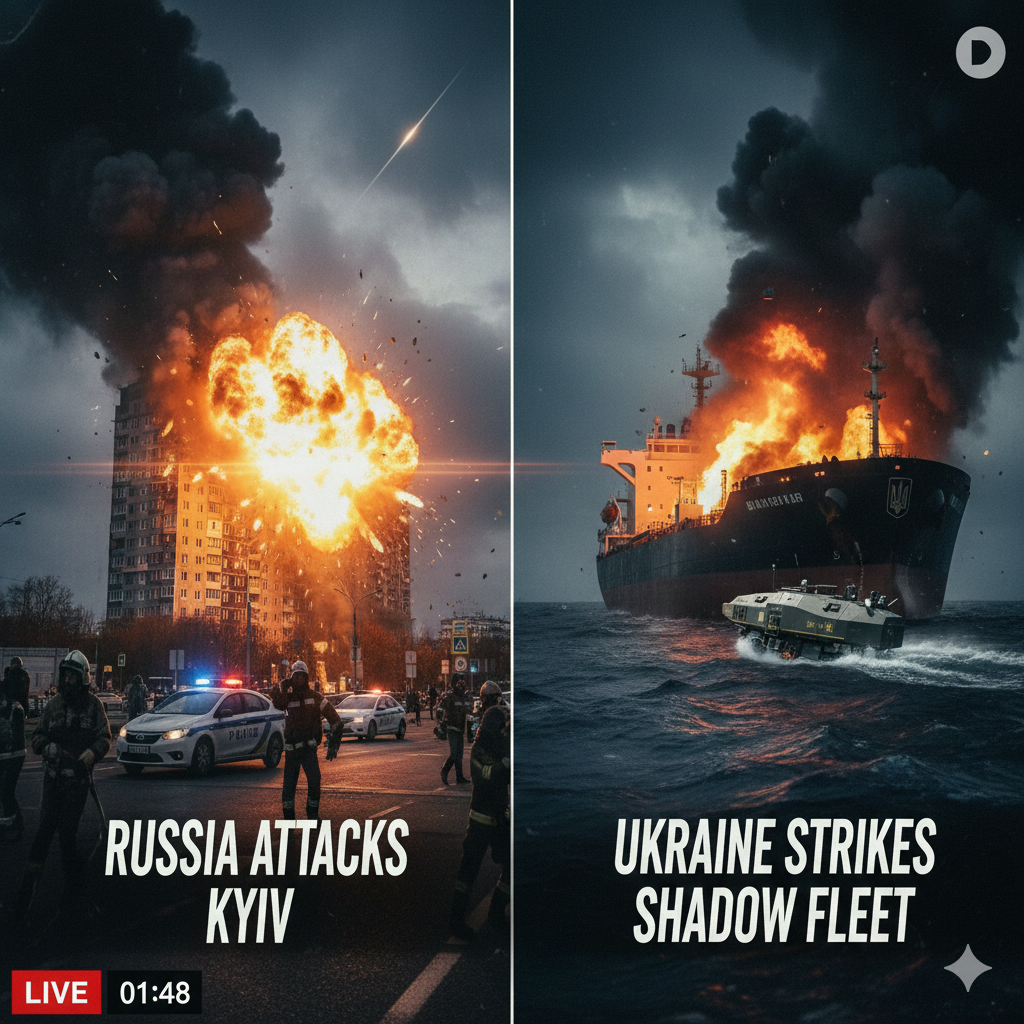
Kyiv, Ukraine – Russian forces launched a series of attacks on Ukraine’s capital on Friday, leaving at least two dead, several injured, and more than 500,000 residents without electricity. At the same time, Ukrainian military forces carried out targeted strikes on what they described as a Russian “shadow fleet,” demonstrating Kyiv’s ability to respond strategically despite sustained pressure from Moscow.
The twin developments mark one of the most intense episodes in the ongoing conflict, underscoring the fragility of security in major Ukrainian cities and the evolving capabilities of both sides.
Deadly Strikes Rock the Ukrainian Capital
According to the Kyiv City Military Administration, multiple explosions were reported across residential and infrastructure areas in the city during the early evening hours. Emergency responders confirmed that two civilians were killed and at least six others sustained injuries ranging from moderate to serious.
“The attacks caused significant damage to power lines and critical infrastructure,” said Mykola Povoroznyk, deputy head of the Kyiv City Military Administration. “Approximately half a million people are currently without electricity, and restoration efforts are underway.”
Civilian Impact and Evacuation Efforts
Local authorities have urged residents to remain in safe shelters and avoid non-essential travel across the city. Hospitals and emergency services have been placed on high alert, with temporary medical units established near heavily affected districts.
Residents described scenes of chaos as air raid sirens blared and families sought cover. “The ground shook from the explosions, and smoke filled the streets,” said one Kyiv resident. “We ran to the nearest shelter, not knowing if our building would survive.”
Authorities are coordinating with municipal services and international partners to provide emergency aid, including water, food, and medical supplies to the displaced population.
Ukraine Strikes Russian “Shadow Fleet”
In a parallel operation, Ukraine announced that its military forces carried out precision strikes against what it calls a Russian “shadow fleet” operating in occupied regions. These vessels, reportedly used for logistics and covert military support, were targeted in an effort to disrupt Moscow’s supply lines and reduce the operational reach of Russian forces in contested areas.
Strategic Significance of the Strike
Military analysts note that the attack on the shadow fleet demonstrates Ukraine’s evolving use of long-range missile systems and intelligence-led targeting. By focusing on logistical and support assets, Kyiv aims to limit Russia’s ability to resupply front-line troops, while minimizing civilian casualties.
“The strike is not just symbolic,” said Anton Shevchenko, a defense analyst based in Kyiv. “Disabling these support vessels forces Russia to rely on more vulnerable routes, potentially slowing down their operations and reducing their effectiveness in the field.”
Escalation Amid Ongoing Conflict
The latest attacks come amid months of tension along Ukraine’s eastern and southern fronts, where Russian and Ukrainian forces have engaged in sustained battles over key towns, supply lines, and strategic positions. While Kyiv has largely been spared direct large-scale assaults in recent months, Friday’s strikes demonstrate that the city remains within reach of Russian military capabilities.
Ukrainian officials have emphasized that civilian areas are being deliberately targeted by Moscow, in violation of international humanitarian law. The government has appealed to the international community for increased sanctions and defensive support, highlighting the urgent need for protective measures for urban populations.
Power Outages and Infrastructure Damage
The Russian attacks on Kyiv caused widespread disruptions to power and communication networks. Authorities reported that critical substations and transmission lines were damaged, affecting hospitals, schools, and residential areas. Repair crews have been dispatched under military protection to restore services as quickly as possible.
Public Services Strained
Municipal services have been stretched to capacity, with emergency responders coordinating multiple priorities simultaneously. Hospitals report increased patient loads, while water and food delivery networks have been temporarily interrupted due to damaged infrastructure.
City officials are asking residents to conserve electricity where possible and to check on vulnerable neighbors, including the elderly and those requiring medical equipment reliant on electrical power.
International Reactions and Humanitarian Concerns
The attacks in Kyiv have drawn condemnation from the international community. The European Union, United Nations, and several NATO member states issued statements condemning the strikes and reiterating calls for Russia to abide by international humanitarian law.
“Attacks on civilians and critical infrastructure are unacceptable,” said a spokesperson for the United Nations Office for the Coordination of Humanitarian Affairs (OCHA). “We urge all parties to ensure the protection of non-combatants and provide unhindered access for humanitarian relief.”
Several international aid organizations have mobilized teams to provide emergency assistance in Kyiv, including food, medical supplies, and temporary shelters for displaced residents.
Civilian Resilience and Community Response
Despite the attacks, the people of Kyiv have demonstrated remarkable resilience. Community centers, local volunteers, and municipal authorities have organized support networks to assist those affected by power outages and damage to housing.
Social media posts from residents reveal a mix of fear and determination, with neighbors helping each other reach shelters, share supplies, and provide emotional support. “We cannot control the bombs, but we can control how we help each other,” said one volunteer assisting in evacuation efforts.
Military Analysts Weigh In
Experts emphasize that Friday’s events highlight the dual nature of the conflict: Russia’s attempts to apply pressure on urban centers and Ukraine’s increasingly sophisticated countermeasures aimed at disrupting enemy supply chains.
“The strikes on Kyiv show Russia’s intent to keep pressure on the capital,” said Igor Lysenko, a security analyst in London. “At the same time, Ukraine’s targeting of the shadow fleet indicates they are adapting, using intelligence and precision weaponry to level the playing field.”
The unfolding dynamics suggest that both sides are prepared for prolonged engagements, with urban centers remaining at risk and strategic assets outside direct combat zones becoming key points of contention.
Ukraine Calls for International Support
Ukrainian officials have reiterated calls for continued international assistance, including air defense systems, intelligence sharing, and financial support for civilian infrastructure repair. They argue that comprehensive backing from allies is essential to protect the civilian population and maintain operational effectiveness against a numerically superior opponent.
“We cannot face this threat alone,” said a Ukrainian government official. “Every defensive system, every piece of intelligence, and every bit of humanitarian support saves lives.”
Looking Ahead: Uncertain Security Situation
The security situation in Kyiv and surrounding regions remains precarious. Authorities continue to enforce air raid protocols, maintain emergency shelters, and monitor potential secondary attacks. Residents are being advised to stay alert and follow official guidance to minimize risk.
Analysts predict that attacks on infrastructure and targeted military operations will likely continue, as both sides adapt to evolving tactics. Observers stress the importance of protecting civilians while maintaining strategic defensive and offensive operations.
Conclusion: Kyiv Faces Continued Threats Amid Resilience
Friday’s events underscore the persistent dangers faced by Ukrainian civilians and the strategic importance of urban centers in modern warfare. While Russia’s attacks have caused significant damage and casualties, Ukraine’s ability to respond with targeted strikes demonstrates adaptability and resolve.
The situation in Kyiv serves as a stark reminder of the human cost of conflict and the ongoing struggle for stability in the region. With international support, strengthened civil defense, and community resilience, the city continues to navigate an uncertain path while maintaining hope for a safer and more secure future.
Leave a Reply